

AI music licensing is here

Welcome to the Alts Sunday Edition 👋
For the past eighteen months, the big 3 major record labels (Warner, UMG, and Sony) have been locked in high-stakes lawsuits against AI-music startups.
Then in late November, in the span of one week, everything suddenly flipped. The labels began signing controlled licensing agreements with the very companies they were fighting.
The music industry appears ready to play ball. But this opens up some huge questions around how rights, revenue, and attribution will be defined as AI music production becomes the norm.
Today, we’ll look at what deals the majors have signed, the new royalty systems that should emerge, and what it all means for labels, artists, rights holders, and music investors.
As always, music rights is one of the most complex alternative asset classes, so I pulled in a bunch of smart, opinionated music industry friends to help us unpack what’s really happening.
Let’s go 👇
One year of lawsuits, one week of deals
The campaign began in June 2024, when the big 3 major record labels (UMG, Sony, and Warner) filed a series of landmark copyright infringement lawsuits against AI music generation platforms Suno and Udio.
The lawsuits claimed Suno & Udio trained AI models on copyrighted recordings without authorization.
Then, suddenly, the tone shifted.
In the span of one week, three landmark deals were announced:
Warner Music Group settled its lawsuit with Udio and announced plans to co-develop a licensed AI-music platform.
Warner immediately signed a separate agreement with Suno
Klay became the first AI platform to secure licensing deals with all three major labels, enabling users to legally remake songs.
The new licensing landscape: Who signed what?
Warner’s settlement with Udio
Warner Music Group resolved its lawsuit against Udio, and announced the two companies would co-develop a licensed AI-music platform.
Before the settlement, Udio was building its model independently and without licensing agreements. That meant Warner had no visibility into what recordings were being used, or which artists in their catalog were being imitated (and thus might trigger future royalty or attribution claims)
A licensing partnership changes all that. Warner will now help set the rules of how the AI-music ecosystem is built.
This effectively gives Warner a voice in the standards that other companies will later be pressured to adopt.
Warner’s separate agreement with Suno
Roughly a week later, Warner also struck a new licensing deal with Udio’s main competitor, Suno.
While details remain limited, the public messaging emphasized transparency, artist protection, and a framework for future royalty participation.
This second agreement matters because it shows that Warner is not picking one AI partner, it’s making a coordinated move toward structural relationships.
Klay signs with all three majors
That same week, Klay became the first AI-music platform to secure licensing from all three major labels.
Under Klay’s licensing agreement, users can legally remix or reinterpret a song. It’s the clearest early sign of how “derivative legality” might work at scale.
Klay appears to be positioning themselves as the “Spotify of AI-remixes.” — a platform that combines streaming + AI-remixing that gives users creative freedom while keeping artists and rights holders (remember, most pop stars don’t write their own songs) in the loop.
Why the sudden shift?
On the surface, it appears the major labels realized that giving controlled access was more practical than fighting.
“This seems more like a concession driven by legal fatigue, technological advances, and platform dominance rather than a genuine effort to protect artist rights.
In the case of all types of entertainment IP, if you can’t beat AI Tool development, you have to join them or at least try to control them (or the narrative)” - Alaire Jameson via LinkedIn
But Scott Cohen, the co-founder of major music distributor The Orchard, as well a former executive at Warner and JKBX, says the majors didn’t concede — they were playing the leverage game all along.
“The industry was always ready to play ball. The issue was, they only play ball on their own terms.
There was no way for the [AI platforms] to win a copyright case. They might win on training, but it was impossible to win on copyright. They simply did not have the right to make copies of the original recordings.
They were always going to license, but they needed to put the AI services in a position where the majors held all the cards. The lawsuits accomplished this.” - Scott Cohen
Basically, the majors know that AI-music is inevitable, and would rather define the terms to their advantage. Early licensing also gives them a chance to set precedents for training royalties, and synthetic-voice permissions.
But there’s something else they want, too.
The labels want equity in the AI companies
Equity is a huge ulterior motive here.
Labels increasingly recognize that the greatest upside may come not from collecting licensing revenue, but from owning equity stakes in AI music companies themselves.
Remember, before Spotify went public, all three major labels secured meaningful equity stakes and left musicians behind. These stakes have paid out handsomely.
Sony and Warner alone realized more than $1.1 billion from share sales, and UMG’s remaining stake is valued at over $3 billion.. These equity sales dwarfed what the labels individually earned from streaming royalties in the early years after Spotify’s IPO.
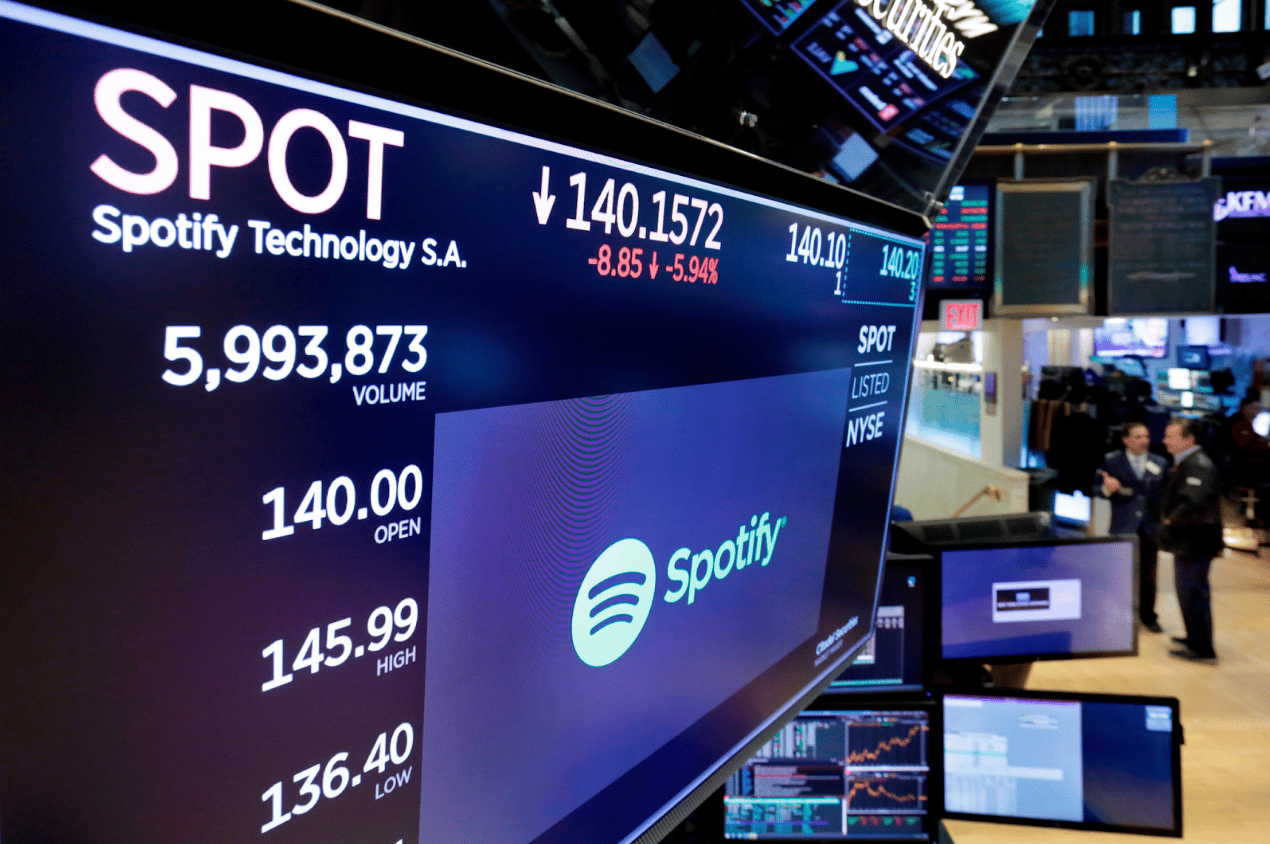
Sony and Warner alone realized more than $1.1 billion from share sales, and UMG’s remaining stake is valued at over $3 billion.. These equity sales dwarfed what the labels individually earned from streaming royalties in the early years after Spotify’s IPO.
As Lance Goldberg from The Partner Fund noted:
“...The music labels know AI is the future of music. And they don’t just want to collect future royalties. They want to participate in the equity upside of these companies altogether.
The upside in what these AI companies could be worth is greater than the amount of royalties they’ll earn over the course of years...or even decades.”
In our Alts community discussion, Adrian Fu added:
“They were always into AI music, all the legal action was about chest beating to get a better deal.” - Adrian Fu, Altea Hong Kong City Captain and talented musician
Amanda Denery is a music royalties consultant. She agrees these agreements are likelyt o disproportionally benefit labels over artists:
“The last thing artists and writers need is more micro payments. This one is not going to result in their benefit. Labels having a stake will benefit them, but how does this filter down to the talent?
...And do the artists and writers have any choice? Opting out is a not the same as opting in.” - Amanda Denery
And interestingly, these potential equity sales aren’t the only windfall labels stand to capture.
There’s a quieter, unappreciated detail in these settlements that’s easy to miss. Scott points out that the majors will receive significant retroactive payments covering prior activity:
“This money is unattributable, so they don’t need to pay artists. Go back to the YouTube settlements. This is a tried and true tactic. [It’s] a huge windfall.” - Scott Cohen
What new royalties will emerge from AI licensing?
These agreements create the conditions for entirely new royalty categories.
It’s still early, but the industry is beginning to sketch out workable models.
1) Training royalties
With training royalties, a record label would license its catalog for training, and AI companies would pay fees for the underlying data that trains their model.
This could take several forms:
Dataset inclusion fees
A platform might pay a fixed fee for the right to train their model on a portion of a catalog.
Hypothetical example:
Suno’s model legally trains on 50,000 approved tracks from Warner’s catalog.
The licensing rate is $0.001 per track per training epoch. (An ‘epoch’ is one complete cycle where the model processes every track and updates its parameters. These datasets are too complex to learn in one sweep, so multiple sweeps will be needed.)
If the model is trained across 20 epochs, the total training fee would be: 50,000 × $0.001 × 20 = $1,000.
That revenue would be distributed downstream to labels and publishers according to the closest comparable bucket, (which today would be “non-interactive performance royalties.”)
Royalty pools
AI platforms could also allocate a share of their subscription revenue to artists and rights holders whose works were part of the training set.
Essentially, this is a pro-rata streaming model which pools all subscription and ad revenue, then distributes that “big pot” among rights holders proportionally to their share of streams.
This approach mirrors Spotify’s pro-rata distribution system, or YouTube’s Content ID pool.
When a video uses registered music, Content ID can monetize the video (through ads & subscriptions), and pay royalties to rights holders. This system has reportedly paid out billions to rights holders since its launch
2) Source-similarity royalties
Source-similarity royalties act a bit differently.
Instead of paying for the data used to train a model, platforms would pay when an AI-generated output statistically resembles an artist or recording.
This approach has been discussed in copyright roundtables in the United States and the UK.
How it could work:
The platform fingerprints each AI remix or generated output that users create. (Think of it as converting the audio into a unique, mathematical signature)
It compares the output to fingerprints in the licensed catalog.
If the output closely aligns with an artist’s style or melodic signature, a percentage of revenue would be allocated to the artist/rights holders.
(Read the full issue in the Alts Community to see a hypothetical example)
In theory, this type of royalty is appealing, because it allows derivative use to become measurable.
But the big question is what happens when this Dua-Lipa inspired track leaves Suno.
For example, let’s say the then uploads the new track to Spotify. There is currently no way to attribute or track this. Spotify would not automatically recognize this AI-generated tracks as derivative of Dua Lipa, unless they had their own fingerprinting agreements rules in place (which do not exist today)!
Amanda Denery agrees, this is an enormous issue:
“The fact that there is nothing in place for attributing the source songs if/when they leave the platform is a huge problem.
There are companies out there (PEX comes to mind) who are leveraging AI to identify variations of copyrighted works. It would be interesting to see if it could keep up with AI mutations. But truly, only AI would be able to keep up.” - Amanda Denery
Adrian Fu thinks artists need to band together to address this:
I hope artists with existing published works will come together and demand a new type of royalty that addresses consumers’ re-use of our original songs that spin off into new works. Because future types of transactions/activities can’t or won’t be accounted for in the current licensing framework. But I’m not hopeful….”
Scott Cohen agrees too, and thinks output analysis alone won’t be enough to solve it:
“One of the big issues will be on the use of the derivative works. Can these works leave the AI platform and enter the distribution channels? That’s a big issue.
The attribution models will need to be more sophisticated and not just look at the outputs. They will need to sit on top or be embedded in the entire model.
The future of attribution models should look like flight recorder boxes on planes. They are neutral tracking systems that don’t care about the type of plane, the company, etc. They merely record all the activity. Flaps up. Wheels engaged. Co-pilot said something. Etc.
Right now that is not how the attribution models work. But they will.” - Scott Cohen
3) Synthetic voice royalties
As voice-cloning tools expand, artists and labels have pushed for clear rights to license a person’s voice itself.
This is the world of voice model royalties, but we don’t have enough space to discuss it in this email.
Read the full issue in the Alts Community.
What does this all mean for music rights investors?
While artists are wary of another shift where labels capture most of the upside, this will create a new revenue layer for catalog sales.
Sean Peace is the founder of Royalty Exchange and SongVest, two of the premier alternative investment platforms for music royalties.
“From an investment standpoint, this is all upside. Music was already oversupplied long before AI showed up. What’s new here isn’t more songs, it’s more ways existing catalogs can generate royalties.
Training fees, derivative use, voice models — those are incremental revenue layers on assets that already exist. That’s a win for long-term catalog investors.” - Sean Peace
The size and durability of this revenue is still unknown. In the short-term, investors should probably think about AI licensing as incremental rather than transformative. It won’t materially change valuations right away. Catalog multiples won’t jump overnight.
But investors should start paying attention to the details here.
One likely outcome is a bifurcation between catalogs that are AI-enabled and catalogs that remain unlicensed. Catalogs that participate in training pools, licensing agreements, and derivative agreements will accumulate small but steady additional revenue streams. Independent catalogs without deals could lag until collective licensing structures (hopefully) emerge.
There’s also a familiar arbitrage angle here.
Last year during our Nashville trip, Dan Weisman illuminated an opportunity in finding what the market had mispriced, through unregistered songs, bad metadata, unpaid foreign royalties, and inefficient distribution agreements.
AI creates a similar setup. There’s now a brewing arb opportunity in buying catalogs from artists which are disproportionately sourced or sampled, as the future inevitable revenue from AI licensing agreements has not yet been accounted for in standard DCF royalty models.
What happens next?
As more settlements land, the market will begin to formalize the mechanics that sit beneath them. (Frankly, there is lots of work to be done.)
Collective licensing frameworks
If independent catalogs are ever going to participate in this game, collective licensing will be essential.
The UK Intellectual Property Office’s 2024 consultation on AI and copyright explicitly asked whether training-data use should be governed by collective licensing or a rights holder opt-out system.
If major-label training deals remain exclusive, pressure will build for a system similar to the Mechanical Licensing Collective (MLC), where smaller rights holders can opt in and receive proportional shares of a pooled fee.
Voice rights as a standardized category
Voice-model licensing remains at the individual level, but a controlled, artist-consent framework is both possible and attractive.
So the likely next step is standard contract language. Artists will negotiate explicit terms covering voice training, invocation fees, and downstream usage.
That could turn the vocal persona into a new formal royalty-bearing asset, similar to neighboring rights or session fees.
AI-native royalty statements
Royalty statements will need to evolve, big time.
Music rights have decades of accounting infrastructure built around streaming, radio, sync, and performance. AI platforms introduce new data points that just don’t map cleanly onto existing systems.
A hypothetical AI-native royalty statement would need to track:
Training-derived revenue. Model training pool distribution (catalog X received 10% of the weighted dataset share)
Derivative-use revenue from remix activity or similarity-based matching (reinterpretation)
Voice-model revenue, triggered each time a synthetic voice is invoked
A per-rights holder allocation across masters, publishing, and performer shares, depending on the underlying contracts
Yes, Content ID reports from YouTube are a starting point. But the difference here is that AI platforms generate content and consumption, so they have the complete accounting trail. (i.e., YouTube knows who watched something, but AI platforms know who created something, how it was generated, what data influenced it, and who consumed it.)
Early versions will be rudimentary and proprietary. Over time, standardized reporting formats will hopefully emerge, especially if regulators require transparency around everything.
Closing thoughts
Zooming out, this is just the beginning of AI entertainment licensing.
Just days ago, Disney (who historically has been one of the most IP-protective entertainment companies) announced an equity investment into OpenAI, which gives licensed access to Disney’s characters (under controlled terms).
What we’re witnessing right now is both the normalization of AI music, and the early shape of how IP gets monetized inside AI platforms across film & entertainment.
One thing’s for sure: If you believe that AI will become a primary interface for creation, discovery, or remixing, then opting of the system out isn’t a good strategy. Licensing is really the only way forward. 🎤
--
That’s it for today.
Big thanks to Scott Cohen, Alairé Jameson, Adrian Fu, Sean Peace, Amanda Denery, Lance Goldberg, and Jaddan Comerford for helping with this issue.
See you next time, Stefan