

Let's mourn Rally

Welcome to the WC.
Today was going to be a deep dive into how to structure a portfolio to make the best use of alternative assets. Sexy!
But then yesterday Rally, which we’ve written about hundreds of times, though not recently, is going through a massive restructuring. Not quite a winding down, but ... something.
So I’ve done my best to figure out what happened to the company via public filings, press, and the company’s own communications (because I said mean things about them and they don’t talk to me anymore).
Nothing here is investment advice. Do your own research. Please.
Let’s go
Extremely long-time followers of this drivel know Alts got its start, in part, working the fractional investing beat. Specifically focusing on Collectable, Otis, and Rally alongside specialist platforms like Vint for wine.
These platforms were so profilc and popular that we planned to build out an interface -- a Robinhood for fractional asssets -- at one point.
Until this week, Rally was the last man standing.
Otis sold to Public in a fire sale
Collectable--god only knows what happened to that tire fire.
Vint switched away from retail investors to focus on HNW, but it looks like they waited too long
And yesterday, Rally announced it will close the platform, sell many of its assets, and roll what’s left into an NYSE-traded entity called PIKA.
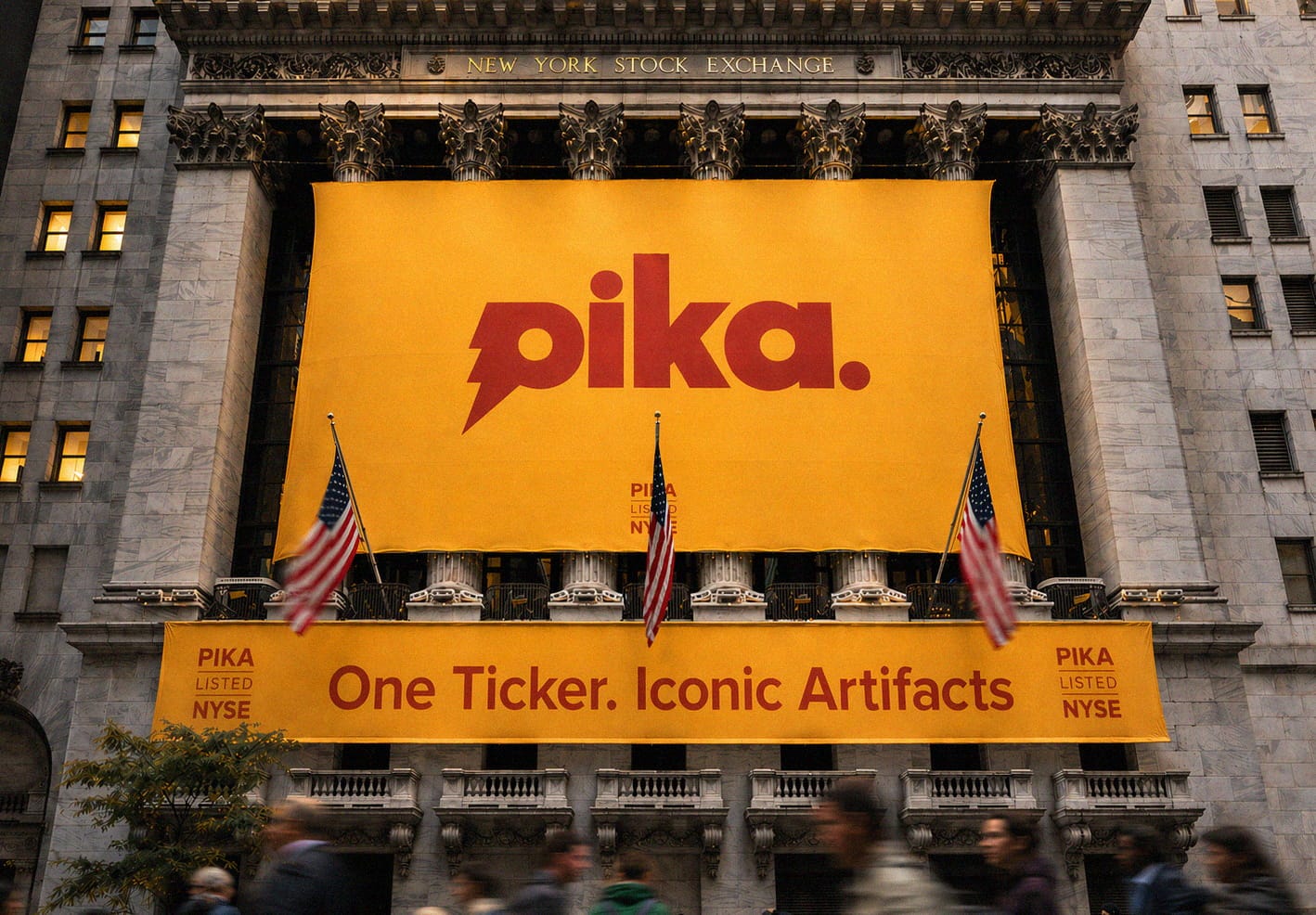
From a personal pov, it’s sad in a way. Where we got started isn’t there anymore. It’s like going home for Christmas, and your mom sold the house and moved in with her boyfriend, and even though the boyfriend’s house is awesome and has a cinema room and a pool and is way better than your crappy old house, it’s not the same.
So today I’m writing Rally’s obituary to the best of my ability.
I asked them for a comment, but I said some mean things about them several years ago, and now they don’t talk to me anymore. So everything below is from public filings and best guesses. If anyone who knows better than me wants to chime in, please do. I’ll include corrections, if necessary, in the next issue of the WC.
But first, that logo?

Look, I’m not a lawyer, but I’ve been sued before (twice!) for IP-related stuff.
I’m just not sure it’s wise:
to call a new collectibles-related entity, which will likely contain Pokemon assets, “PIKA,”
and put a lightning bolt in the first letter of the word.
When one of the most world’s most iconic and recognised characters--owned by one of the most prolifically litigious companies in the world--is named PIKAchu and has a lightning bolt for a tail.
But I’m not a lawyer; if you are, I’d love to hear what you think!
What was Rally?
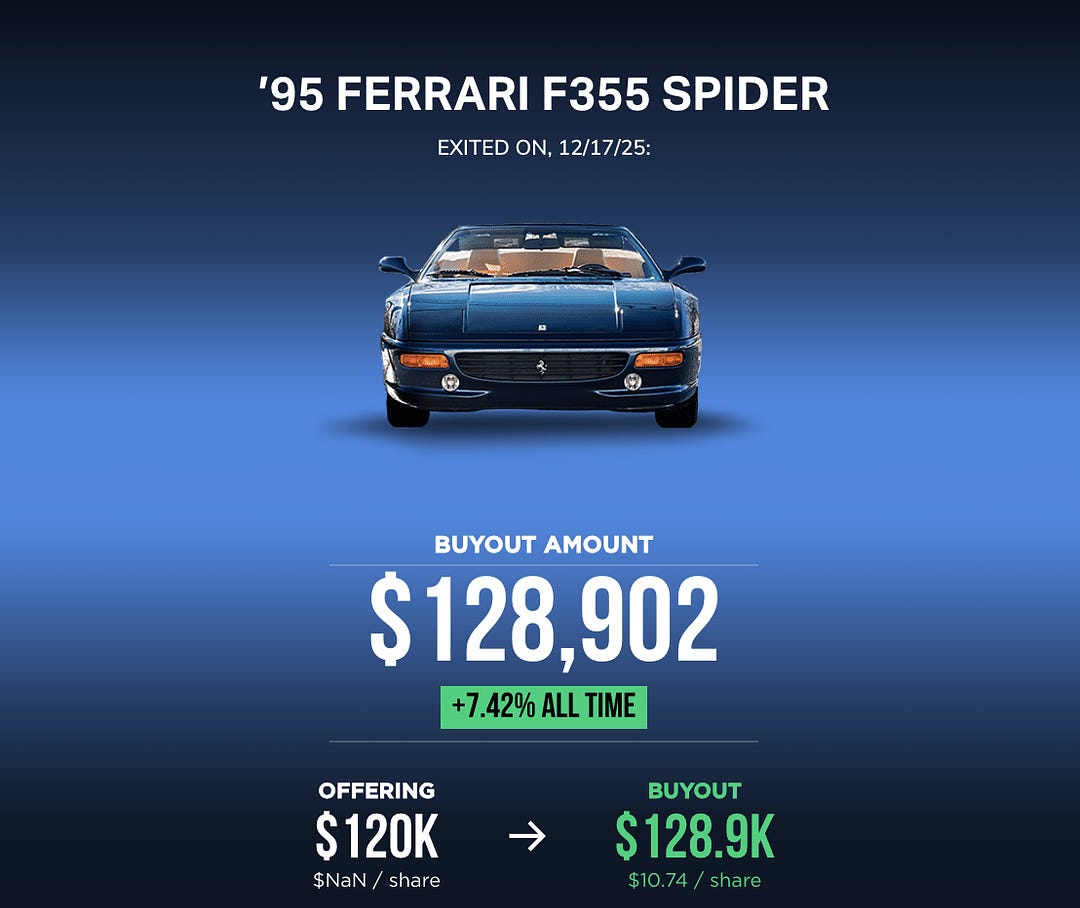
Rally was one of, if not the, first fractional platforms to offer prestige assets to unaccredited retail investors. For the first time, $10 got enthusiasts a share of a supercar.
The company tapped into genuine enthusiasm for collectibles and made the most of all that Covid cash burning a hole through a captive audience’s pockets.
Riding the collectables and COVID boom, Rally swiftly expanded its offerings into more and more asset classes.
Over time, the company made some choices that deviated from that original mission, but we’ll get to that soon.
What happened?
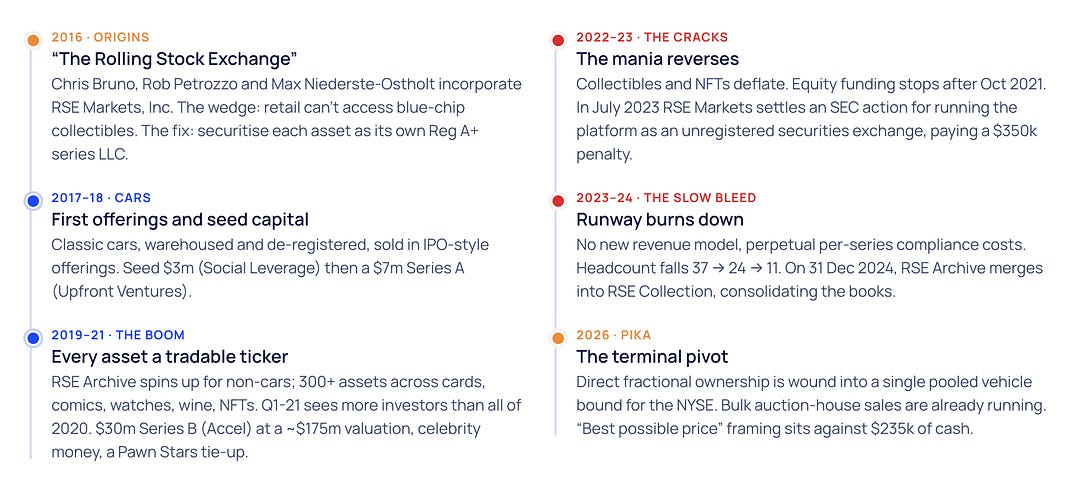
By late 2020, Rally was offering up nearly one new asset per day to its audience, many of which sold out within minutes.
No one was more excited about this
The company offered up a staggering number and variety of items through 2021 and 2022, which led to fat fees and lots of publicity.
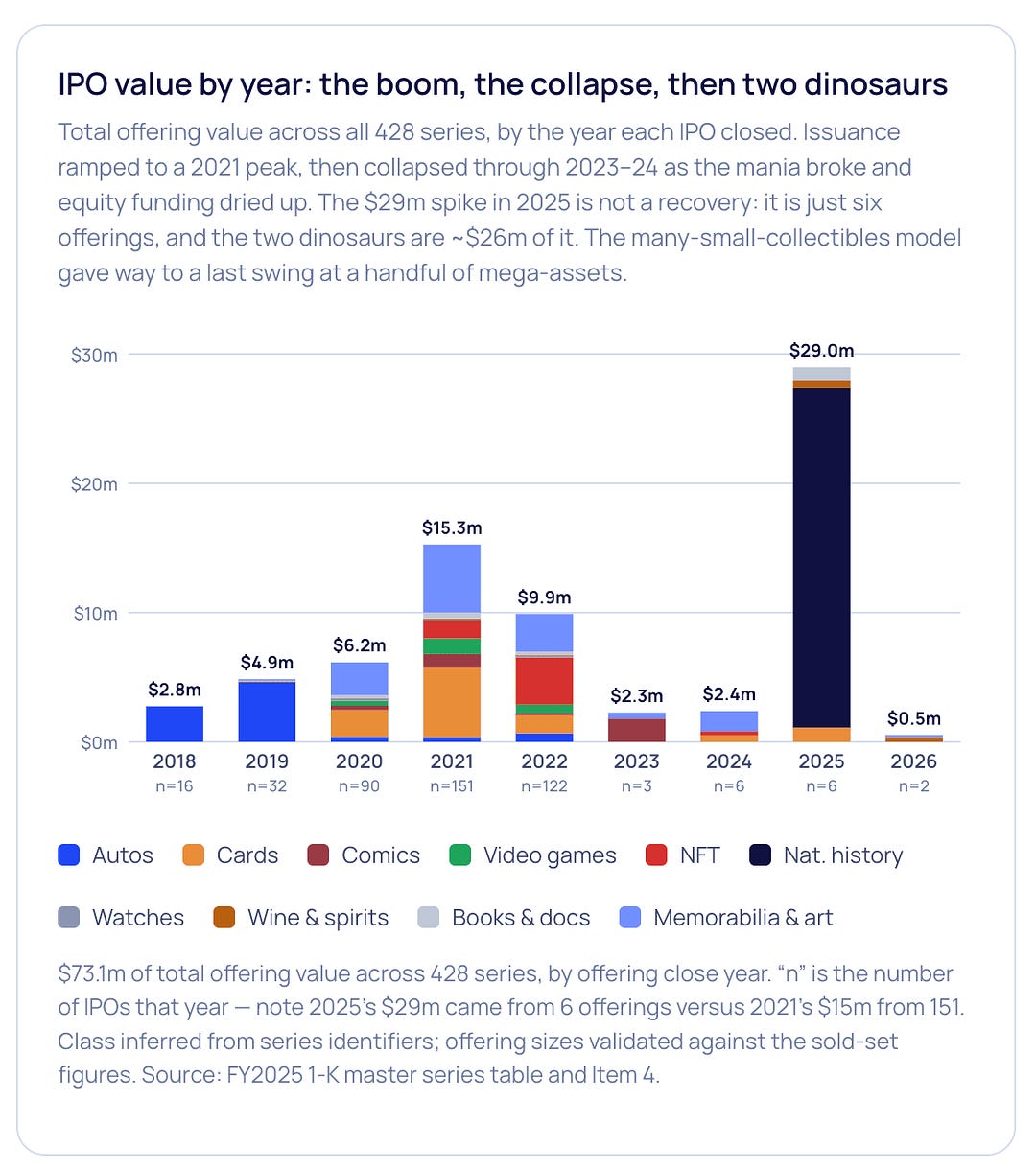
Those 2022 NFT numbers are ugly
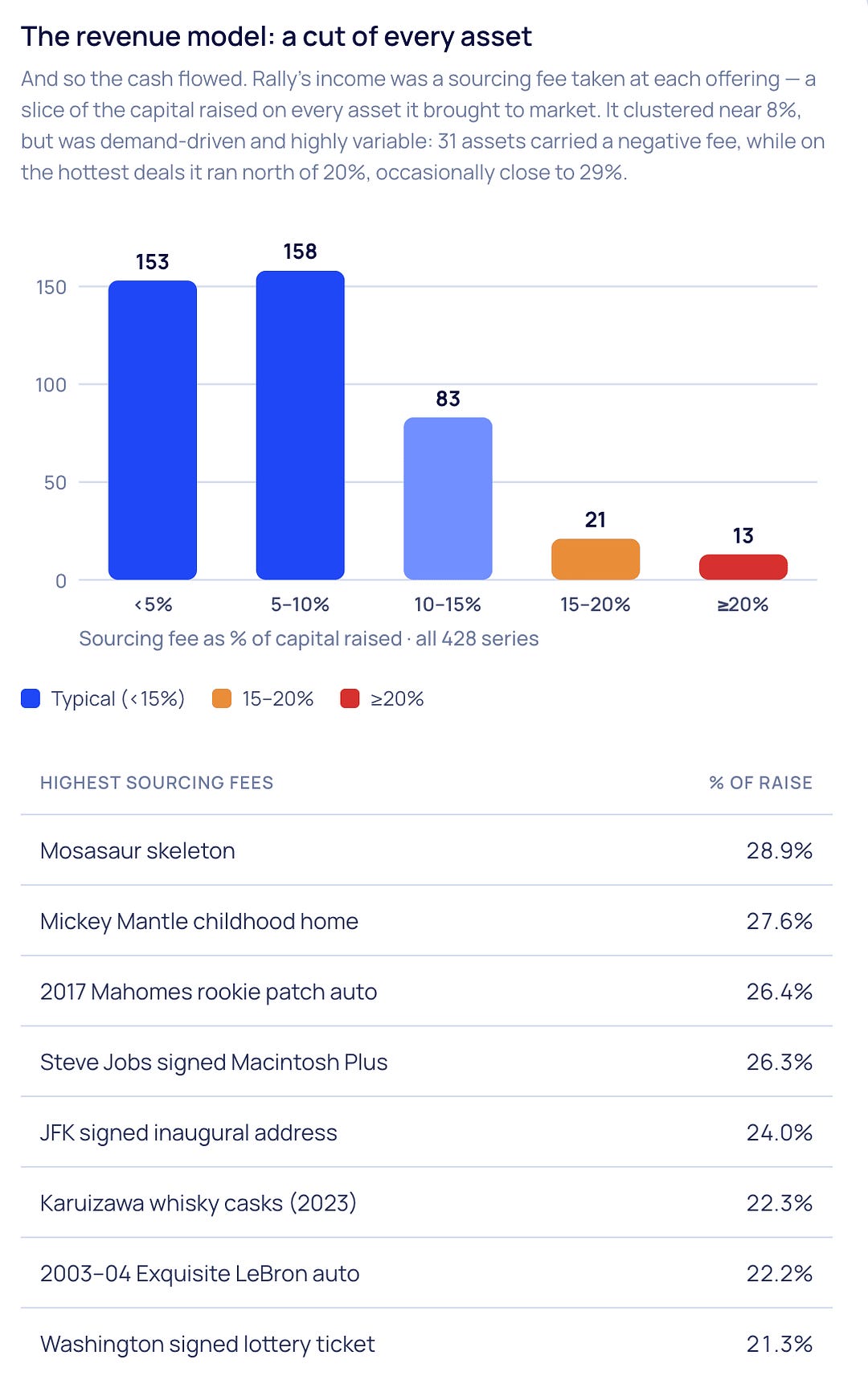
And so the cash flowed, because the company’s model was to take a cut of each new asset, mostly in the form of a sourcing fee sometimes north of 20% of the item’s value.
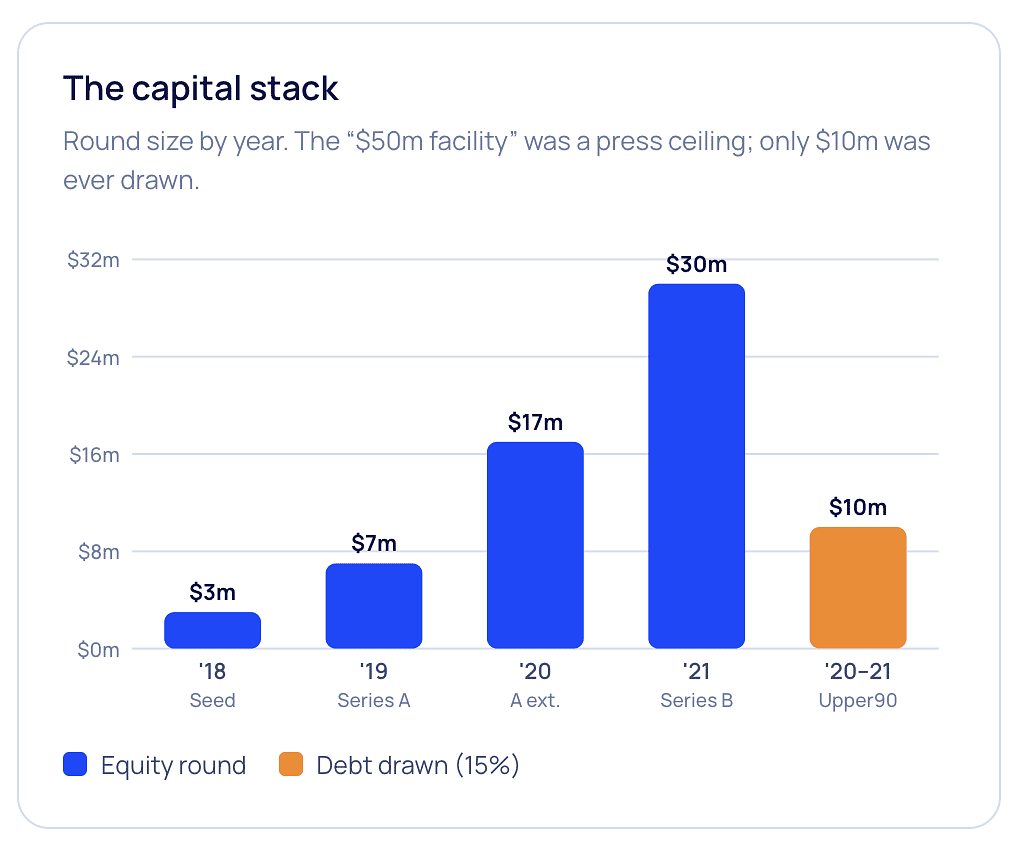
And those economics supported increasingly rich equity (and debt) raises from a basket of investors that included a heap of celebs and athletes.
But the problem with frontloading revenue is that you need an endless supply of new assets to sell your investors.
Everything already on the books is just a cost center.
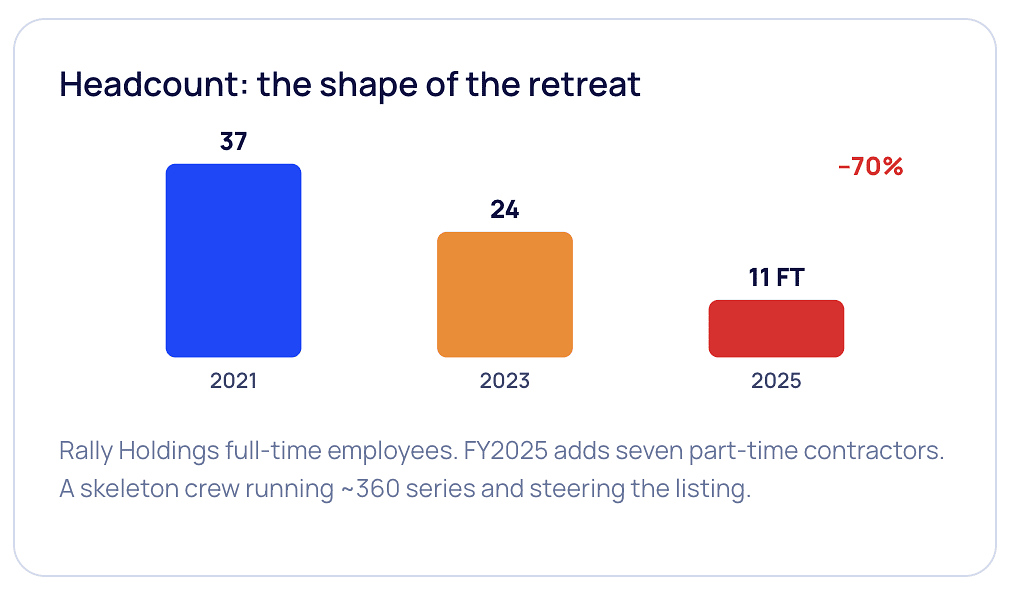
Insurance, legals, storage, reporting, headcount...this is all expensive anywhere, but it’s particularly draining if you employ 37+ people in Manhattan.
Remember the IPOs chart above? Here’s a refresher.
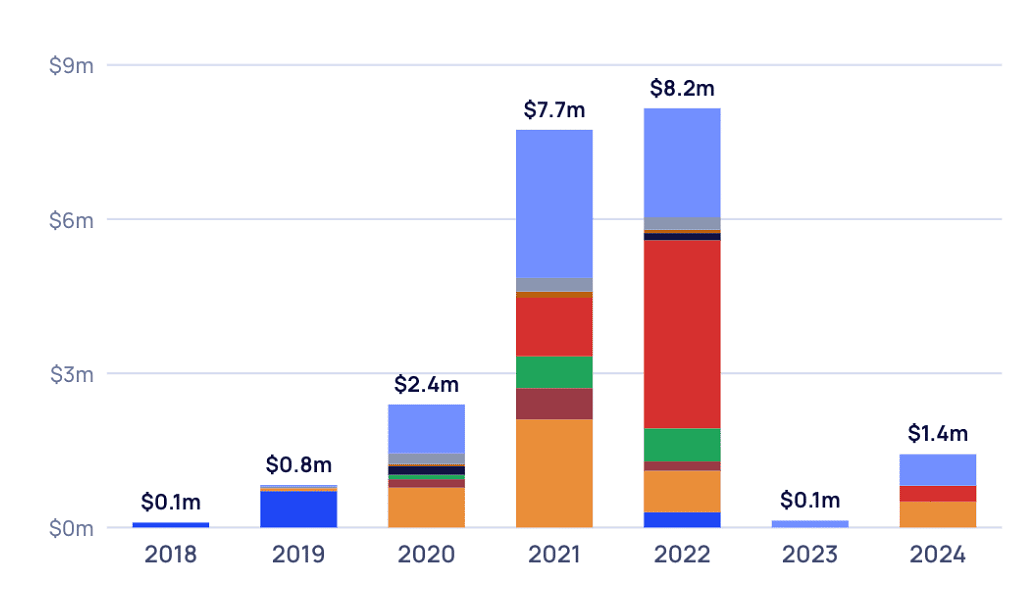
2023 was...difficult
In 2023, the company’s revenue completely dried up, while losses mounted and cash disappeared.
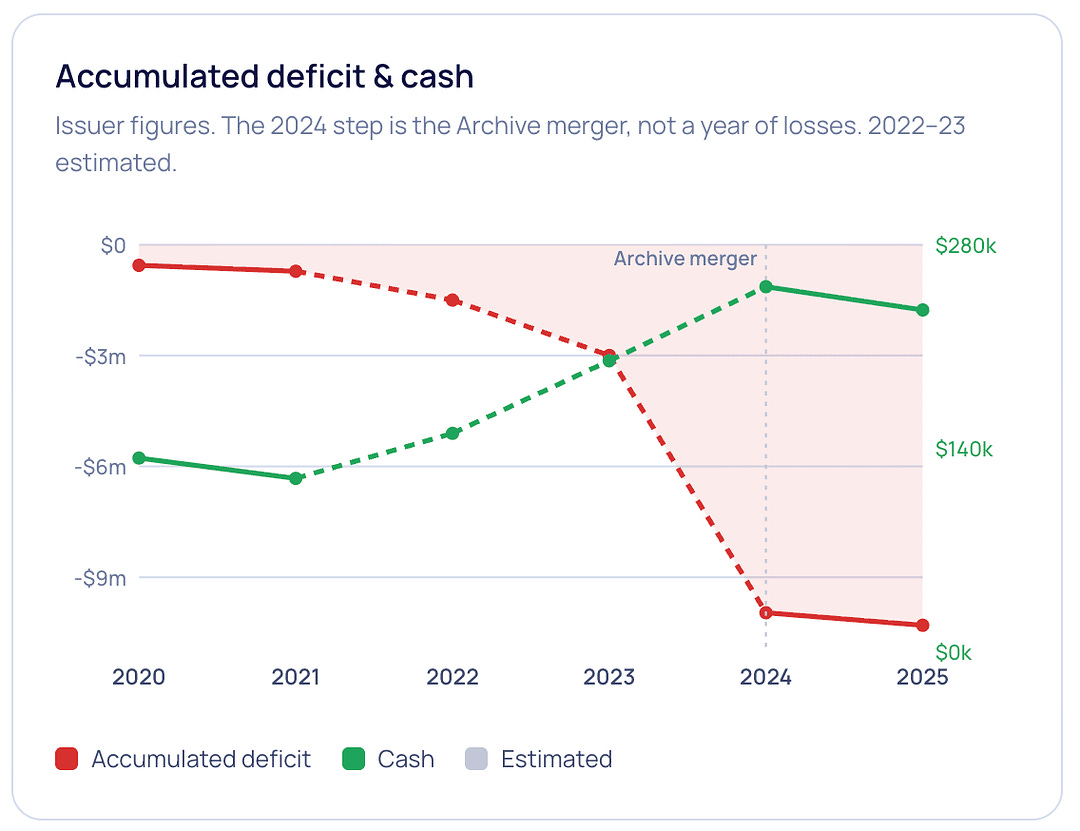
We had to estimate a lot of this, sorry.
The revenue plan, I think, was to tax transactions made via the platform’s secondary market. But markets need both buyers and sellers, and sellers became increasingly frustrated with what they considered poor returns.
Ultimately, the numbers around many of the assets weren’t great.
My research dug up 110 realised exits with a weighted 1.37× gross multiple, turning $18.1m of raised capital into $24.8m of sale proceeds before the sourcing fee, holding costs and tax on the gain.
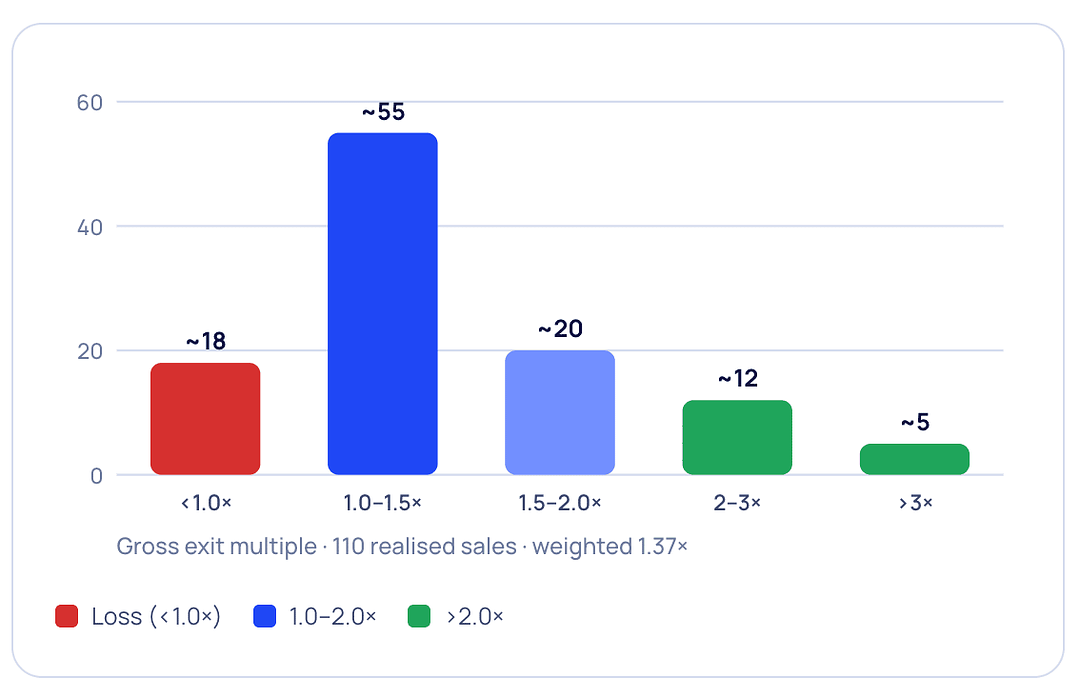
Burt this is the flattering end, true survivorship bias.
It counts only the assets they chose to sell. A 13.3× Super Mario and a 4.2× Pelé sit in the same table as an NFT at 0.23× and a run of cards at 0.6-0.9×. The unsold tail, and the fee and tax drag, pull the true portfolio experience well below 1.37×.
So what to do when things aren’t working?
The pivot
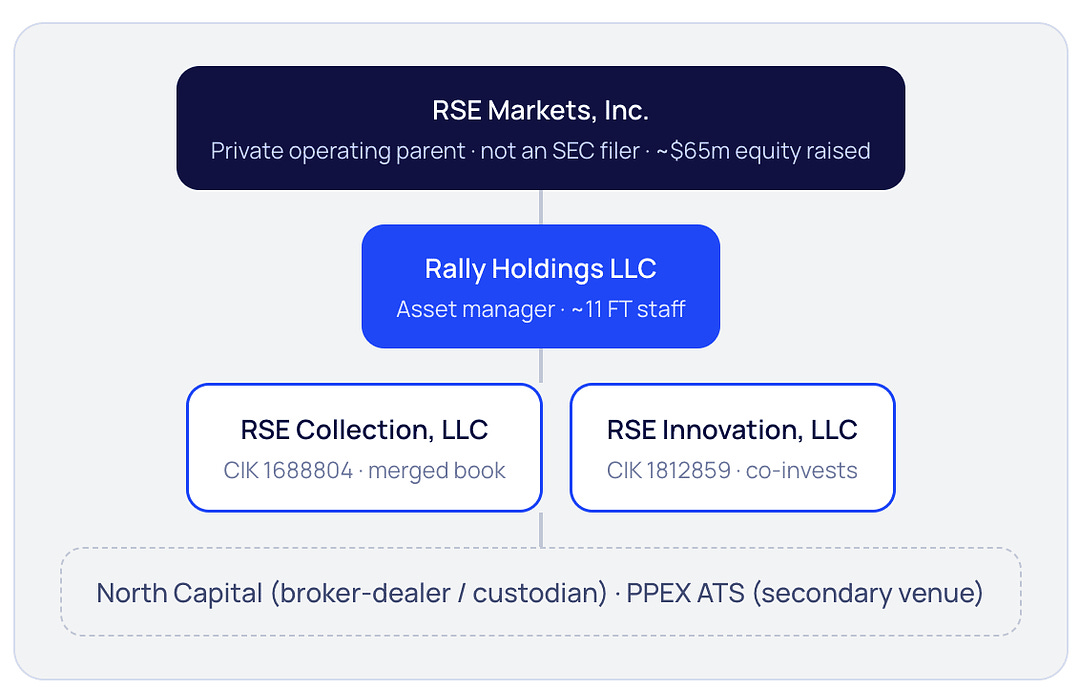
In 2022, Rally started focussing on bigger assets sold mostly to institutional insiders through its new entity, RSE Innovation, LLC.
This new entity launched a baffling array of stuff from domains to dinosaurs to Mickey Mantle’s childhood home. It was a new model throwing everything at the wall to see what would stick while continuing to collect sourcing fees to keep the lights on.
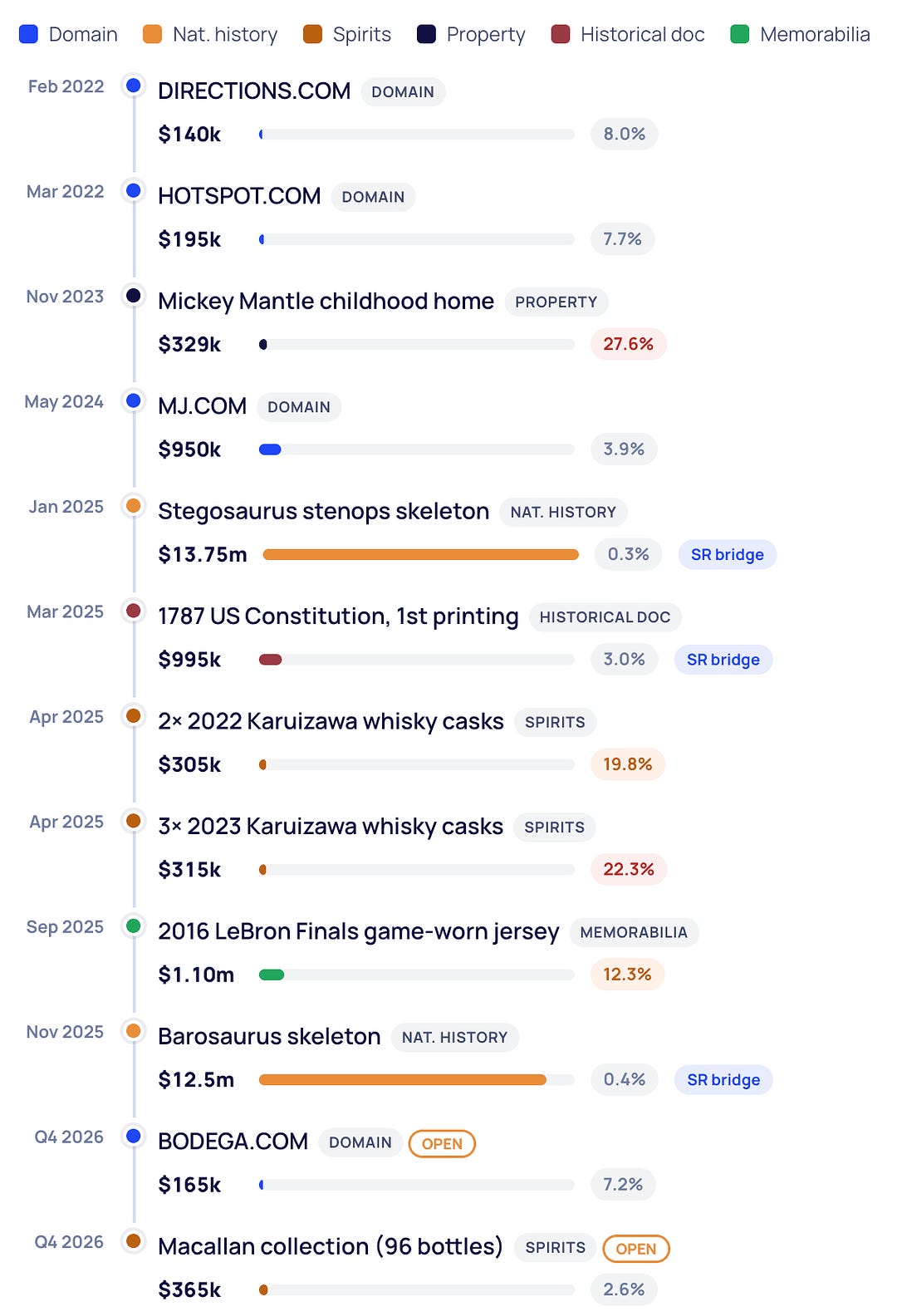
The vehicle did try some genuinely innovative stuff.
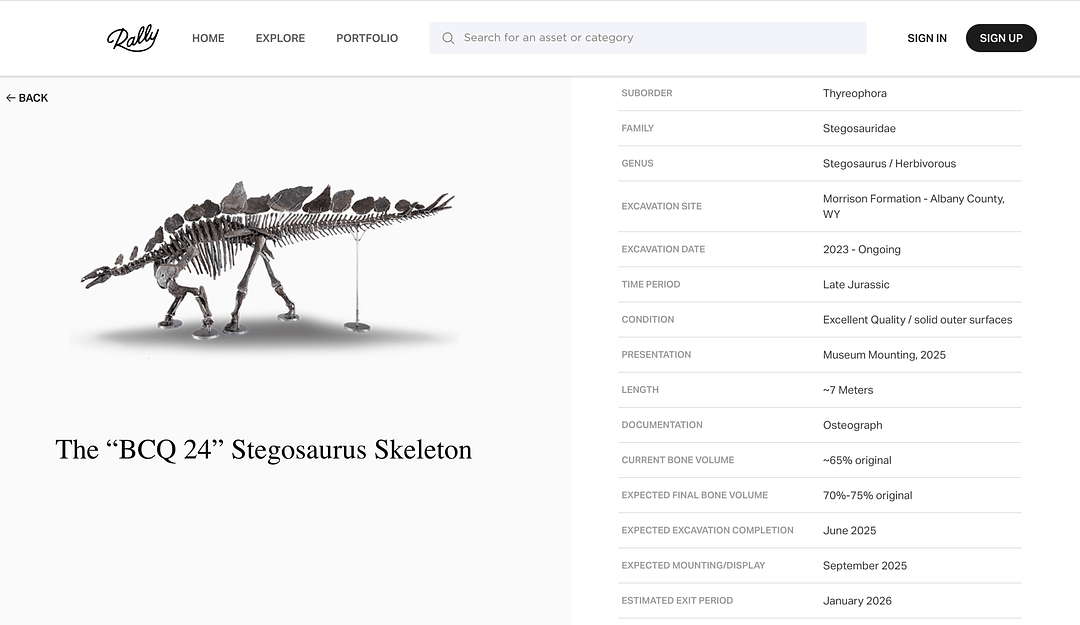
The Stegosaurus they sold was still in the ground when Rally IPO’ed the dinosaur. The idea is that investors would fund the dig and get a share of cash when the asset is auctioned off.
But even this asset, marketed as the company’s most important offering ever, has been hamepered by missteps and--perhaps--misfortune. The public-facing page for Steggy is stale with a forecast sale date of January 2026 and an anticipated mounting date of September 2025.
Rally’s weekly newsletter makes it clear they were waiting for Sotheby’s to auction off Gus, the most complete T-Rex ever, to get a feel for the market.
Lucky them, Gus smashed expectations yesterday selling for over $50m.
Possibly this asset will move now, but you wouldn’t know that from their public-facing pages.
I digress. But the takeaway....
Apparently nothing really stuck despite four years of sporadic IPOs.
So what’s next? PIKA!
So now Rally, and its investors, and the asset owners, enters the brave new world (available on the platform!) of PIKA.
This is what’s left on the books as Rally takes this next step.
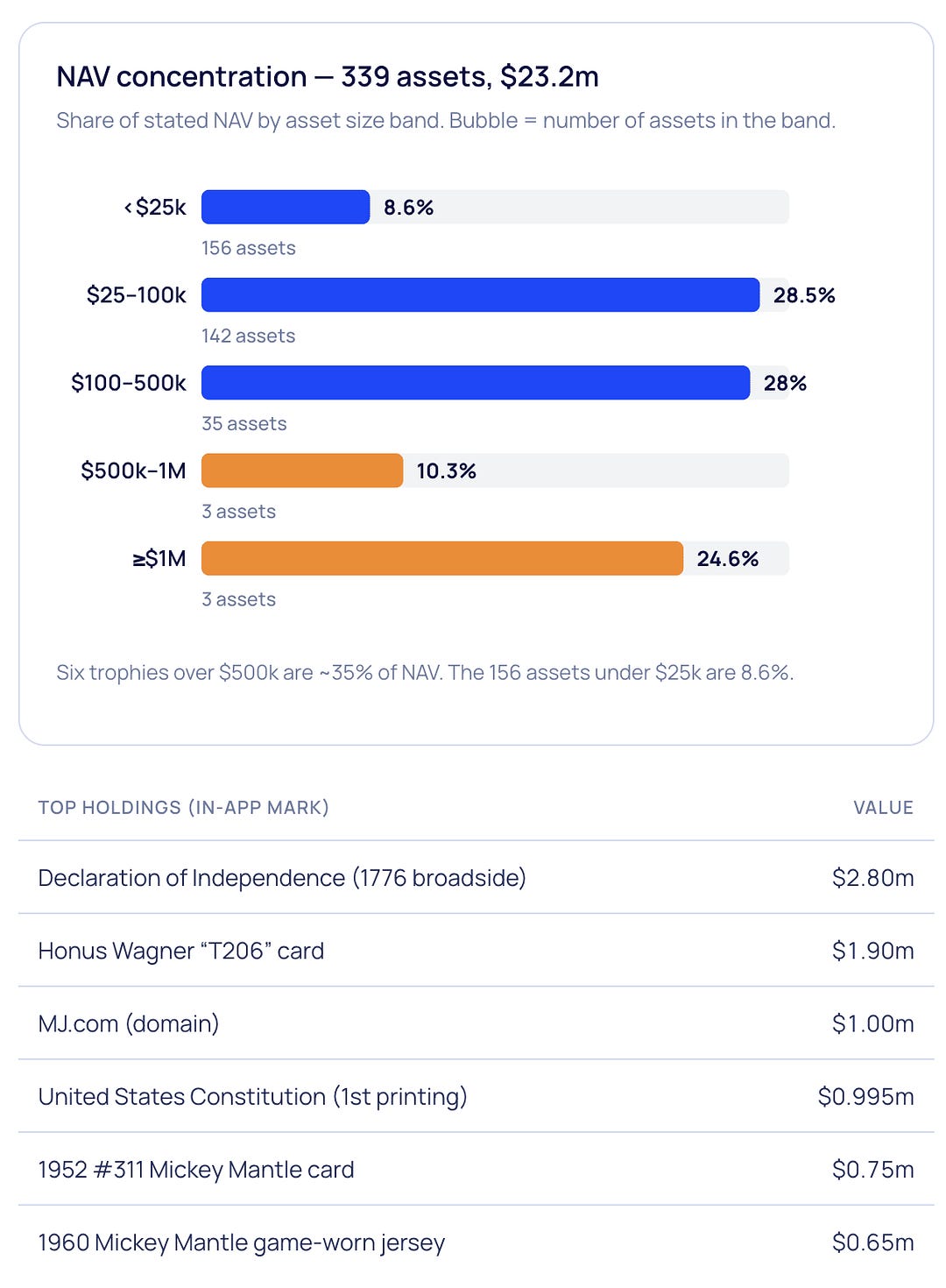
These marks are a ceiling. Independent reporting found Rally’s in-app values often sit above real auction comps, because nobody sells at a loss, so the marks stick high.
Details of PIKA are thin, and nothing I can find suggests it’s been registered with the NYSE yet, and Rally is still out raising money to front the listing, and and and. But this is my best guess of what it’s going to look like.
Rally will sell off lots of its non-core assets. The ones that are easily bundled, and/or liquid, and/or too bizarre to put on the NYSE.
The rest will be dumped into PIKA, which is a basket of collectibles that will float on the NYSE.
Fractional investors in these items don’t get to decide which of their assets go where or when. It’s up to Rally.
This is probably good for folks holding less desireable assets, as they’ll get bundled in with true trophy items. A bit like dumping Twitter into SpaceX.
Rally will collect management fees on the bundle, maybe 1-2% per year, which will generate perhaps $500k per year in fees before paying for insurance, storage, legals, any remaining headcount, and so on.
It’s fair to assume PIKA will trade at a big time discount to the current stated NAV for two reasons.
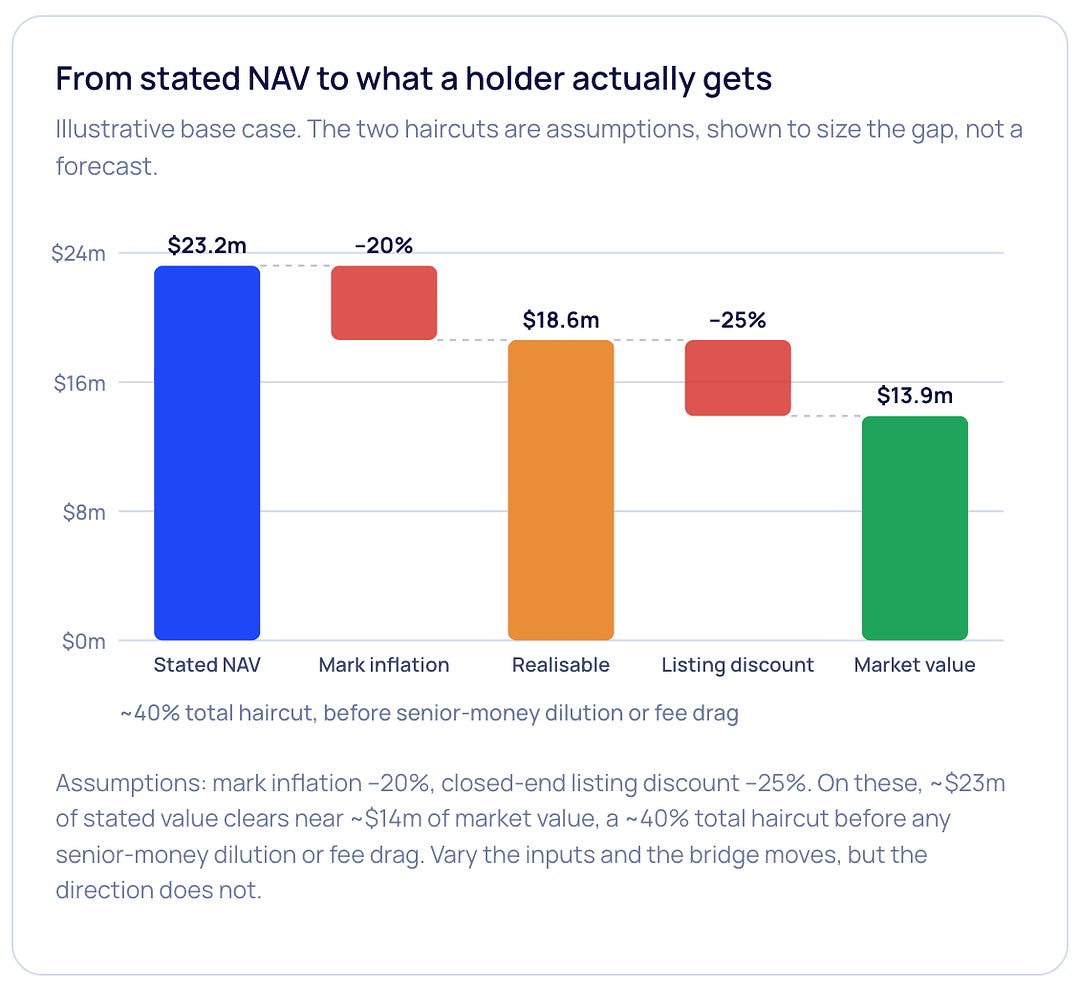
First, the valuations on the site today are inflated. Second, this is an illiquid closed end fund with (probably) very little liquidity.
I don’t know where this leaves the company. What do you do when you’ve raised $65m from investors, and your next big play is forecasting maybe $500k a year revenue? Possibly there’s more to come. Maybe they’ll keep digging up dinosaurs.
Probably I’m an idiot and just don’t get it.
I dunno.
I do know I’m grateful to Rally and all those behind it. They’re part of my own alternative investing origin story, and it’s plausible I wouldn’t be where I am today if it weren’t for their efforts.
Best of luck, guys.
Next time please pick up the phone, k?
Cheers,
Wyatt
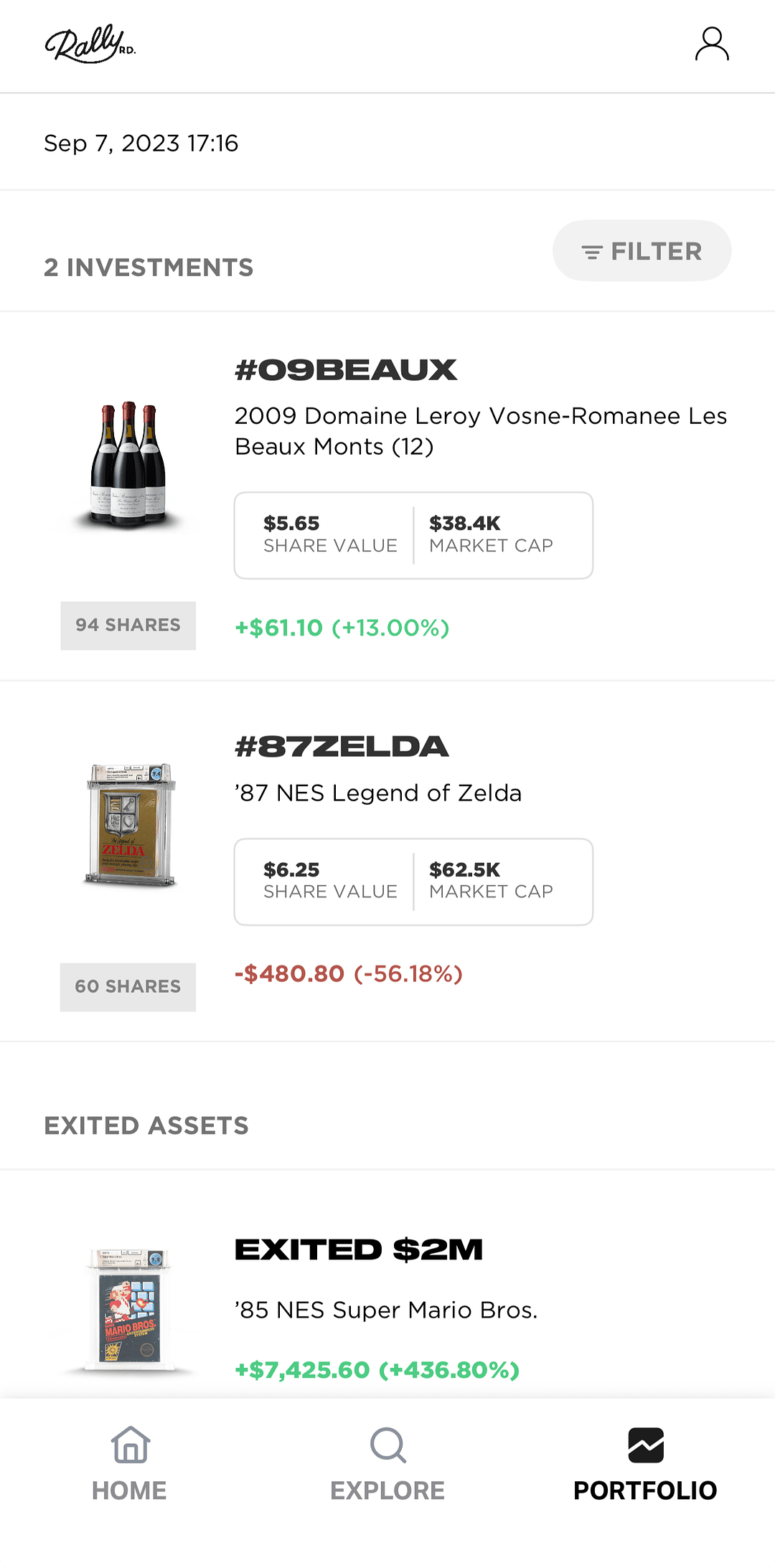
PS: I still have a couple assets on the Rally platform. Feel free to buy them!
 |
|
Oh wow
yes I have things to say (also was quoted in NYT) ... But not nice things so co-write would be a good way to make it more balanced
https://youtu.be/HyouMR1Jjpg
https://youtu.be/OreDlu3yeB0
https://youtube.com/shorts/oJGnc4mTcAs?feature=share
Nice breakdown. Eventually collectables all face the same challenges in the business model. The cracks in Masterworks may not be very visible yet...but it would make an interesting breakdown