

Let's profit from unpredictability

Welcome to the WC.
You’re in the final stretch. Part three of our three-part series analyzing the black-swan nature of America’s current administration.
Let’s go
It’s been a heavy couple of weeks where we’ve tried to figure out the psychology and strategy behind America’s executive branch and forecast some of its upcoming moves.
Why wade into the political muck?
Our members keep getting caught off guard by the unexpected because they keep treating Donald Trump’s White House like any other one.
But this administration’s motives and psychology are fundamentally different from any that have come before, which means our approach to investment must be different as well.
Based on the current administration’s revealed preferences, we identified 10 potential black swan scenarios that may occur over the next 3 years.
Events, policies, or environments that would be very unlikely under a traditional US administration that are much more likely today.
Now it’s time for the money shot.
How do we position our portfolios to preserve capital at worst and enrich ourselves at best?
I’m giving you my best ideas below. Some are defensive, others are more aggressive.
If any of these sound compelling to you, let me know. We might build it.

Southeast irrigated farmland
Base IRR: 10-14% (cash yield plus land appreciation)
Upside IRR: 16-22% if Mexican produce flows are disrupted
Scenarios: USMCA rewrite, Mexico cartel strikes, USD devaluation, Fed independence shock
Collateral: Fee-simple land. Orderly sale recovery 85-95% of appraised value.
The United States imports 88% of its fresh tomatoes from Mexico. Most investors know there’s tariff risk on Mexican goods. Almost none have thought through what happens to the fresh produce supply chain if those flows are physically disrupted -- not in a policy paper, but at the actual border crossings. Just-in-time refrigerated logistics through a handful of crossing points, and the whole thing stops.
The play is to buy irrigated specialty-crop farmland in Georgia, Florida, or the Carolinas -- land that grows the same crops that come off trucks from Sonora. Not Iowa corn, which earns a flat cash lease and doesn’t benefit from Mexican supply disruption regardless of what happens in Washington. Irrigated land growing tomatoes, berries, and peppers earns more when those trucks stop.
The structure is straightforward: you acquire 80-200 acres and lease it to an operator on a fixed base rent plus a crop-share kicker -- a percentage of gross crop revenue above a set threshold. Entry price is $5,000-10,000 per acre for irrigated specialty ground. The base rent pays whether or not any scenario materializes.
The kicker is where the optionality lives.
If every geopolitical thesis turns out wrong, you own productive farmland in the fastest-growing US population corridor, earning cash rent. That’s the floor.
Tariff refund claims
Base IRR: 20-35% if the portal operates on schedule, 6-18 month hold
Upside IRR: 40-60% if the portal launches early and statutory interest accrues in full
Scenarios: Existing legal basis is independent of future policy -- the claims already exist. Additional Section 301 tariffs and allied coercion create new vintages of future claims.
Collateral: None. Pure litigation finance. Sized at the minimum for exactly this reason.
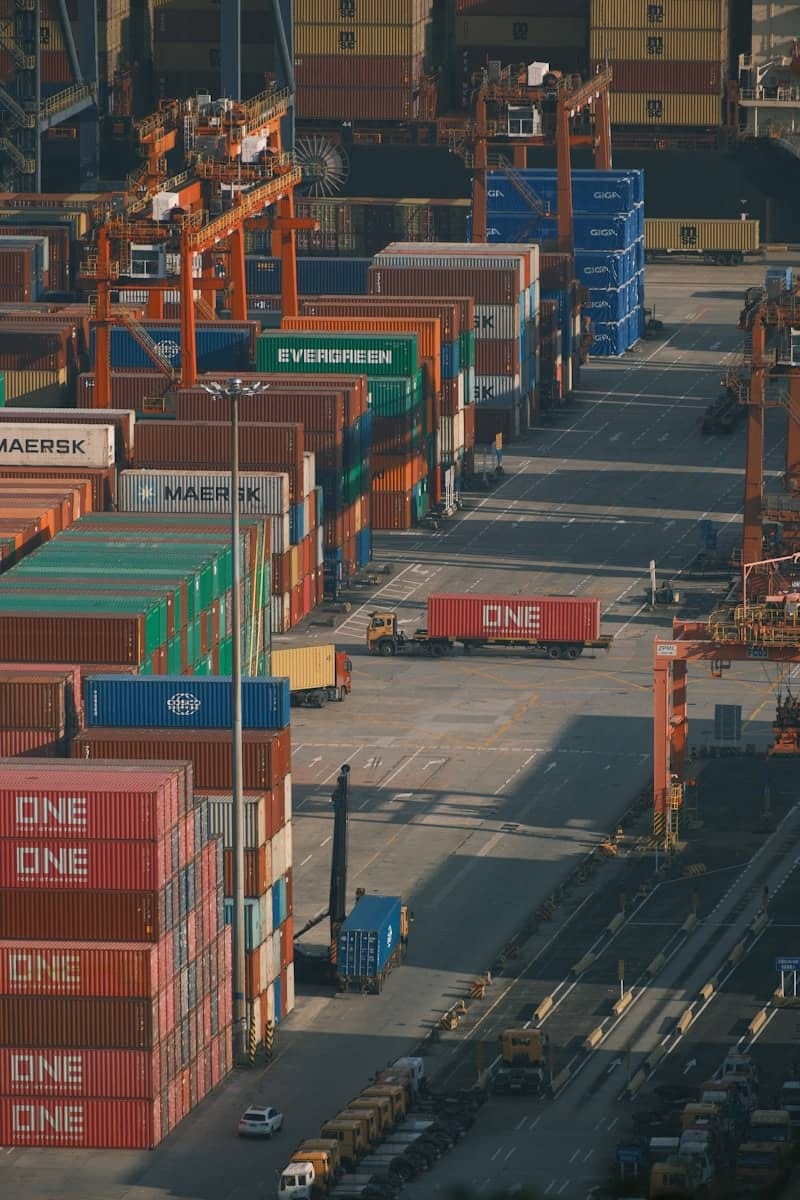
In April 2025, the US Court of International Trade ruled that certain tariffs imposed under the International Emergency Economic Powers Act exceeded the President’s statutory authority.
That ruling created something concrete: a legal basis for 330,000+ importers to claim refunds on duties already paid.
The refund pool is $166 billion. CBP is building the repayment system right now -- as of April 2026, somewhere between 40% and 80% complete.
The problem for importers is twofold. The claims process is complex, requiring documentation, tariff classification evidence, proof of standing, and procedural compliance. And many affected businesses are small. They cannot wait 12-18 months for a government portal to process their paperwork. They need cash now.
The play is to buy their claims at 50-70 cents on modelled value. When CBP pays, you collect the full refund plus statutory interest. The spread is the return. You’re not waiting for a scenario to materialise -- the claims already exist and the legal basis is already established.
You build a portfolio of 8-12 well-documented claims from different importers, each screened by a customs litigation specialist, each independently verified for standing and documentation. The portfolio effect is the point: if 7 of 12 pay in full, the failed claims are covered by the winners.
Industrial outdoor storage
Base IRR: 14-18% over 24-36 months
Upside IRR: 22-30% if tariff-driven pre-positioning demand spikes occupancy and lease rates
Scenarios: Semiconductor tariff escalation, Section 301 on allies, USMCA rewrite, allied coercion
Collateral: Fee-simple land. Forced-sale recovery 65-80%.
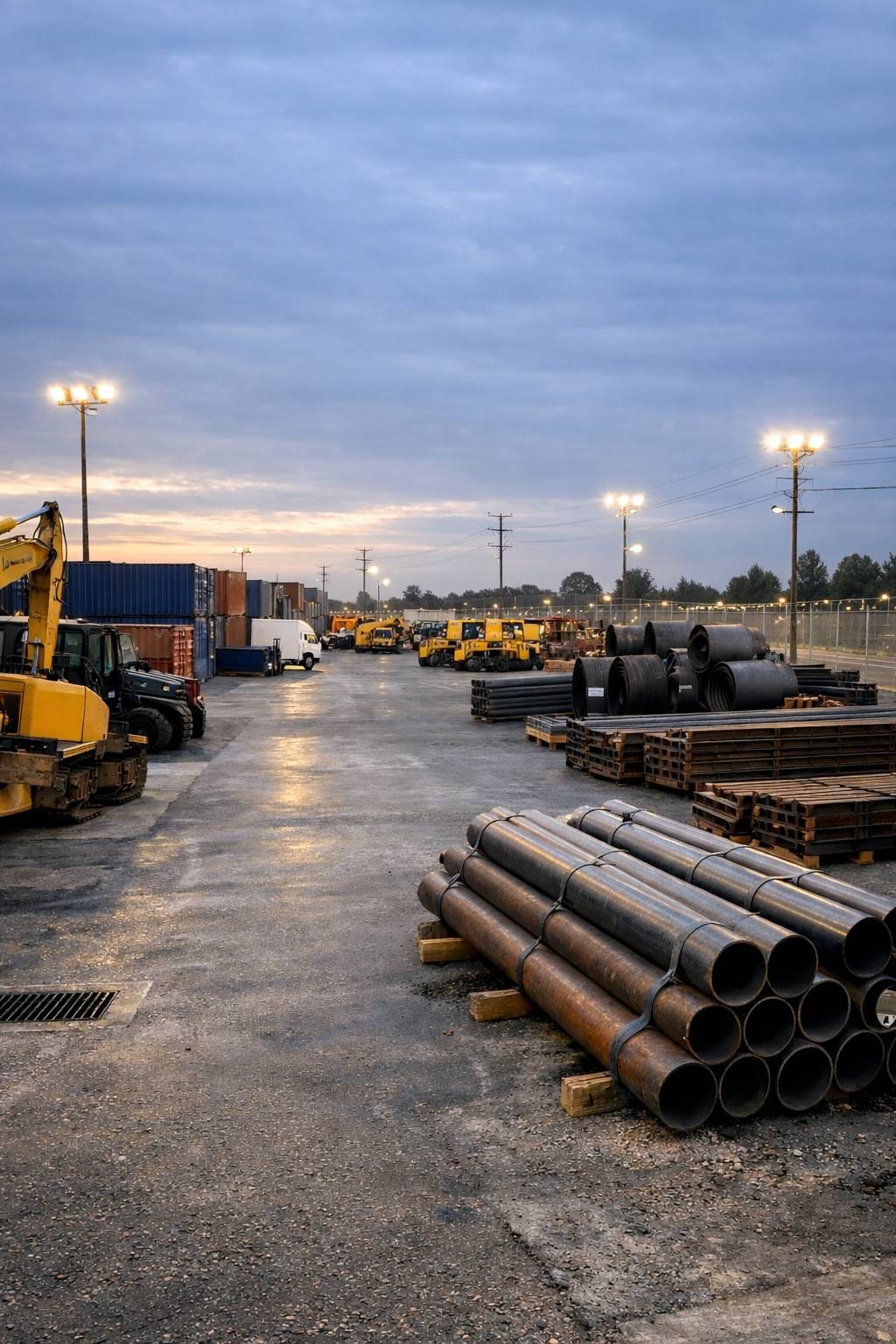
An IOS yard is a paved lot. Fenced, drained, lit, with access roads. Importers, utilities, steel distributors, and construction companies pay to store heavy equipment, containers, pipe, and materials on it. That’s the whole business.
It has been one of the strongest-performing segments of US commercial real estate for five years running.
E-commerce needs last-mile staging.
Port congestion needs off-port buffering.
Manufacturing reshoring needs laydown space during construction.
Every tariff cycle since 2018 has produced the same pattern: importers scramble to pre-position inventory, and every paved surface near a port or logistics corridor fills up.
The play is to acquire 3-8 acres of fee-simple land in a logistics corridor, improve it with fencing, grading, drainage, and lighting for $50-150K, and lease it triple-net to tenants who need flexible outdoor storage.
Institutional capital is in this market but chasing portfolios of ten sites or more at $20M+. Individual yards at $500K-$1.5M are too small to bother with. That’s the gap.
Target corridors:
Savannah and Charleston for East Coast port exposure
Houston for energy equipment and petrochemicals
Dallas-Fort Worth for the largest inland logistics hub in the country.
On a 5-acre improved yard leased at $4 per square foot annually, gross revenue is approximately $87,000 on a $700K total investment. That’s 12.4% gross yield unlevered.
If everything goes wrong, you own land. It doesn’t depreciate.

Film bridge lending
Base IRR: [Redacted due to SEC regulations], 8-16 week loan duration per deal
Upside IRR: Higher end of range if loans extend into Phase II, which accrues at a higher rate
Scenarios: None. That’s the point.
Collateral: Government-issued film tax credits and distributor minimum guarantees -- contractual receivables, not performance risk. LTV typically 20-30% of verified collateral value.
Every other play in this programme has some exposure to what happens in Washington. This one doesn’t.
Independent film productions routinely face gaps of 8-16 weeks between when they need cash and when contracted payments arrive -- a state tax credit that takes time to process, or a distributor advance that pays on delivery rather than on greenlight.
The production can’t wait. Bridge lending fills that gap.
The loans are short-duration and senior-secured. The collateral is not a bet on a film’s commercial success. A government tax credit is a line item in a state budget.
A distributor’s minimum guarantee is a contractual obligation to pay upon delivery of a technically compliant film. Neither depends on box office performance, critical reception, or whether anyone in Washington changes their mind about trade policy.
Co-investors participate alongside our existing Film I and Launch JV entities in individual loans via loan participation agreements -- essentially buying a seat in a specific deal rather than committing to a blind pool.
Each loan is secured against verified collateral worth substantially more than the amount lent. The JV retains 20% carry on returns above the participant rate; the participant keeps the rest.
We have arranged more than 35 film bridge loans since 2015 with zero realized principal loss. The infrastructure, legal templates, and deal flow already exist.
Every portfolio needs one position that simply does not care what happens in Washington. This is it.
The other five
The remaining plays are real. They’re just harder to execute quickly or require operational infrastructure that needs to be built first.
Transformer and mobile substation pool
($1.5M, 15-35% IRR)
Acquires tested electrical equipment from utility auctions and leases it triple-net to data centres and semiconductor fabs. The US has a documented 2-3 year shortage of large power transformers -- lead times have extended from 12-18 months pre-pandemic to 2-3 years today. Tariffs on imported steel and electrical equipment make already-landed, domestically-sited equipment more valuable.
Bonded semiconductor inventory line
($1M, 15-19% IRR)
Lends against serialised semiconductor tool spares and switchgear sitting in US customs-bonded warehouses. The distributor pre-positions inventory before tariff escalation and captures the tariff spread on each sale; you earn carry on the facility plus a participation in any price premium above the baseline.
Magnet scrap recycling facility
($1.25M, 18-40% IRR)
Provides a revolving credit line to an electronics recycler buying decommissioned hard drives for their neodymium magnet content. Every enterprise hard drive contains permanent magnets with recoverable rare earth elements -- elements that China controls and has restricted exports of twice in the past fifteen years. A new generation of domestic processors is building the supply chain to recover them. The recycler needs working capital to aggregate feedstock. No bank will lend against mixed electronic scrap. That’s the gap.
Mexico-to-US tooling migration loan
($1M, 18-25% IRR)
Provides bridge financing to US-controlled manufacturers relocating moulds, dies, and fixtures from northern Mexico to US facilities ahead of potential USMCA rule changes. Draws are milestone-based and tied to physical relocation -- capital goes out as assets cross the border, not before.
Music royalty strip
($1M, 8-11% IRR)
Acquires a senior income strip from a small song catalog generating $80-110K in annual streaming and performance royalties. Large catalog buyers won’t touch anything below $5M in value, so clean catalogs at this size trade at 8-12x trailing royalties versus 15-25x for institutional packages. Streaming revenue does not care about tariffs, central bank credibility, or the peso exchange rate.
Nothing here is investment advice. Do your own research. Please.
That’s all for this week; I hope you enjoyed it.
Cheers,
Wyatt
 |
|